
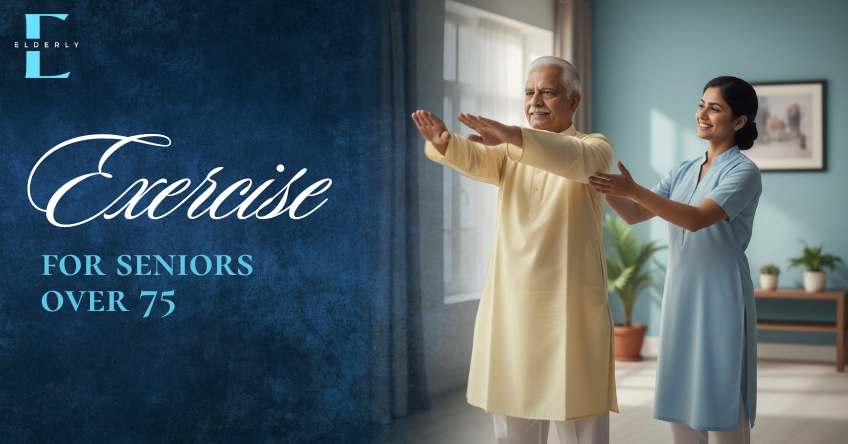
Exercises for Seniors Over 75 (Detailed Guide)
As people age, their physical, emotional, and medical needs increase, making professional elder care an essential part of healthy ageing. In today’s fast-paced world, families often struggle to balance work, responsibilities, and the growing care needs of their elderly loved ones. This is where Elderly Wellness plays a vital role.
As the body ages, inactivity can lead to stiffness, muscle weakness, poor balance, and a higher risk of falls. Incorporating simple daily exercises for seniors over 75 can significantly improve flexibility, circulation, posture, and emotional well-being. Even light movements performed consistently can help seniors walk more steadily, sit and stand with ease, and manage age-related conditions more effectively.
This guide is designed to help families, caregivers, and older adults understand the importance of age-appropriate physical activity. It introduces safe and easy exercises for seniors over 75 that can be done at home, with or without support, focusing on strength, balance, and joint health—without strain or discomfort.
Regular movement at this stage of life is not just exercise; it is a form of self-care that supports independence, dignity, and a better quality of life.
Table of Contents
Gentle Exercises for Seniors Over 75: Building Strength Without Strain
For seniors over 75, exercise is less about fitness and more about preserving independence. Simple daily movements help the body stay responsive making it easier to walk steadily, rise from a chair, or move without fear. The exercises below are commonly recommended because they mirror everyday actions and support joints, balance, and muscle strength in a safe way.
Part 1 – Lower Body Strenght Excercises
Maintaining lower body strength is essential for seniors over 75 to stay balanced, mobile, and independent. Gentle exercises like chair squats help with safe sitting and standing, while quadriceps strengthening supports knee stability and easier walking. Step-ups improve balance and leg coordination for daily movements, and side hip raises strengthen the hips, reducing the risk of falls. Practised slowly and consistently, these exercises support safe movement and everyday confidence.
1) Chair Squats

Standing up from a chair may seem ordinary, but it is one of the first movements that becomes difficult with age. Chair squats gently strengthen the thighs, hips, and lower back the muscles responsible for standing, sitting, and walking.
Practised regularly, this movement helps seniors feel more secure when getting out of bed, using the toilet, or standing after meals. The goal is slow, controlled movement rather than repetition. Even a few careful attempts a day can make daily life noticeably easier.
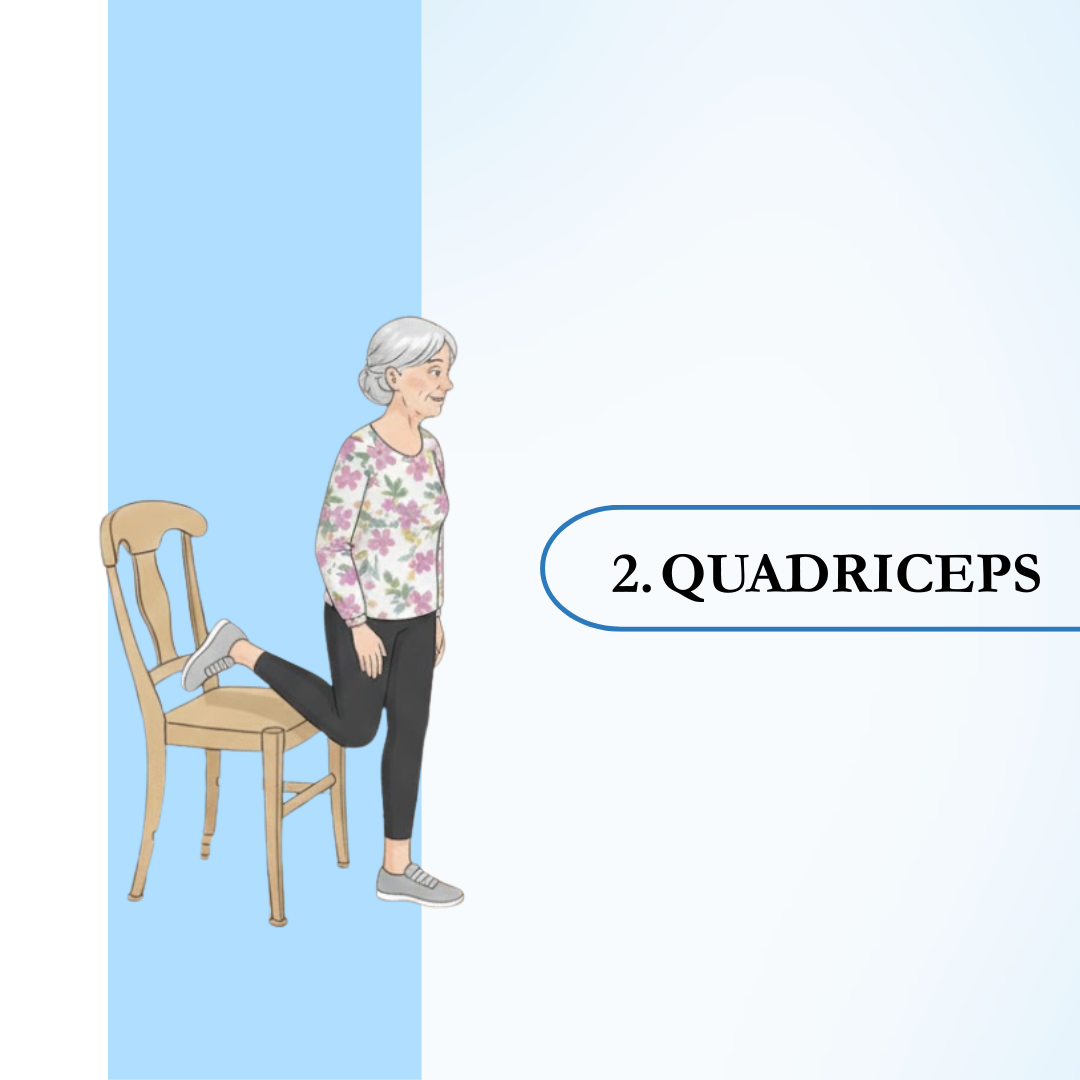
2) Quadriceps
Strong quadriceps muscles are essential for seniors over 75 to stand up, walk steadily, and maintain balance. These muscles support the knees and reduce strain during everyday movements such as sitting, standing, or climbing a small step.
Gentle quadriceps exercises help improve leg strength, reduce stiffness, and support joint stability. When practised slowly and consistently, they make daily activities feel safer, smoother, and less tiring, supporting long-term mobility and independence.
3) Step Ups
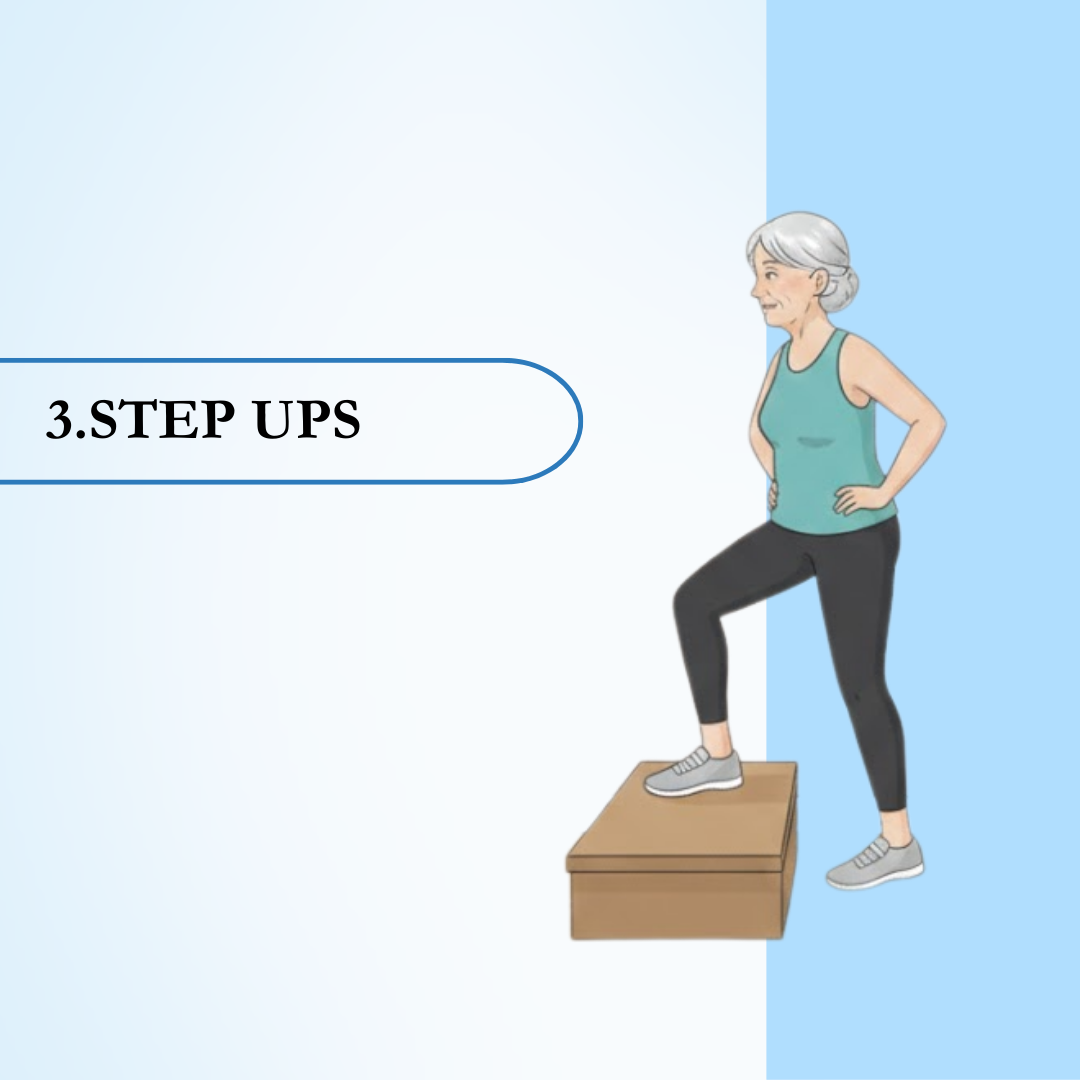
For adults over 75, step-ups support leg strength, balance, and coordination required for everyday activities such as climbing a small step or entering a vehicle. Using a very low step and holding a chair or railing for support ensures safety and confidence.
This gentle movement encourages steady walking, reduces stiffness in the hips and knees, and helps seniors feel more secure while moving around their home and familiar surroundings.
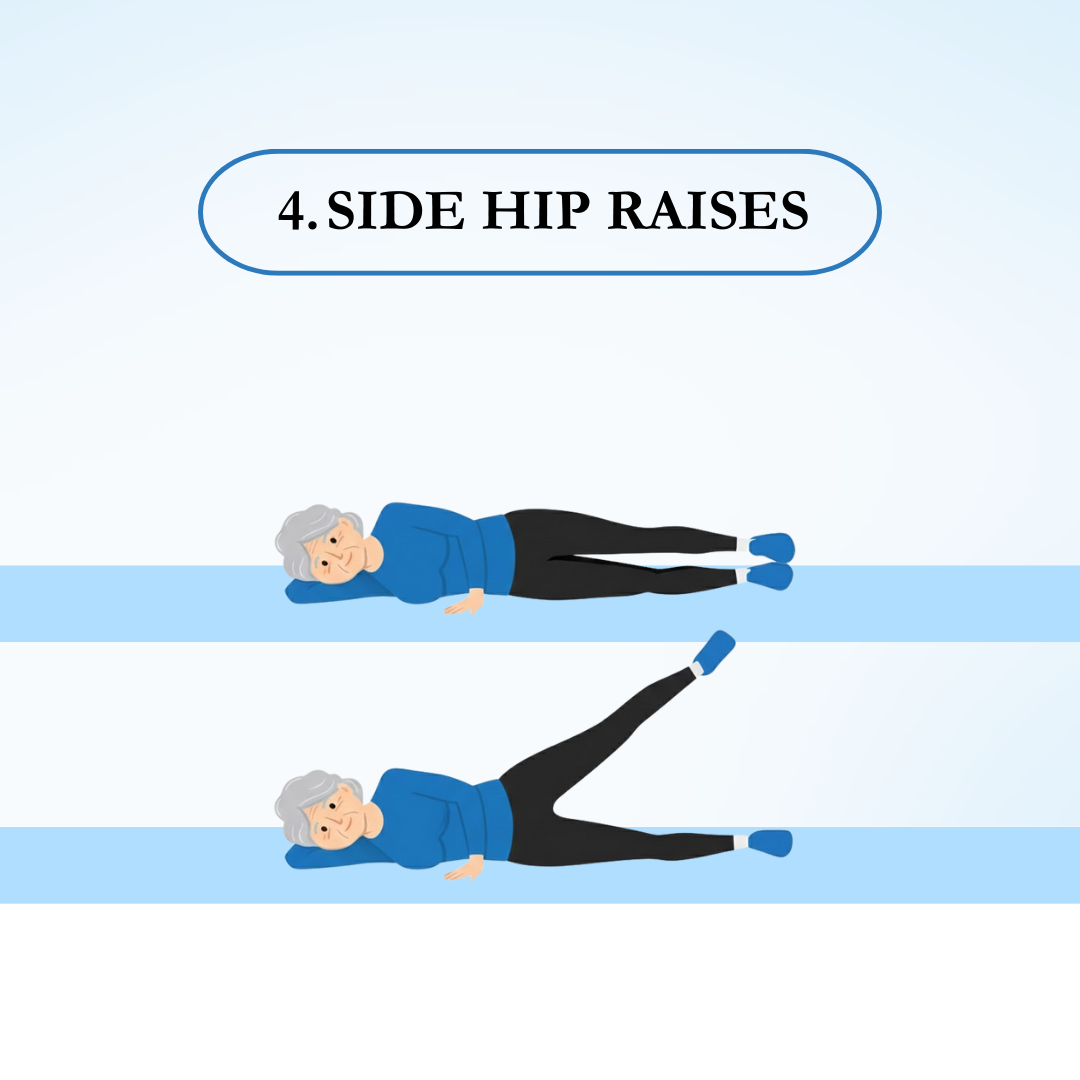
4) Side Hip Raises
Side hip raises help seniors over 75 strengthen the muscles that support balance and stable walking. Strong hips reduce the risk of falls and make everyday movements like turning, stepping sideways, or standing for longer periods feel easier.
This exercise is gentle on the joints and can be done safely while holding a chair or wall for support. When practised regularly and slowly, side hip raises improve confidence, posture, and overall stability during daily activities.
Part 2 – Upper Body Strenght Excercises
5) Wall Push-Ups
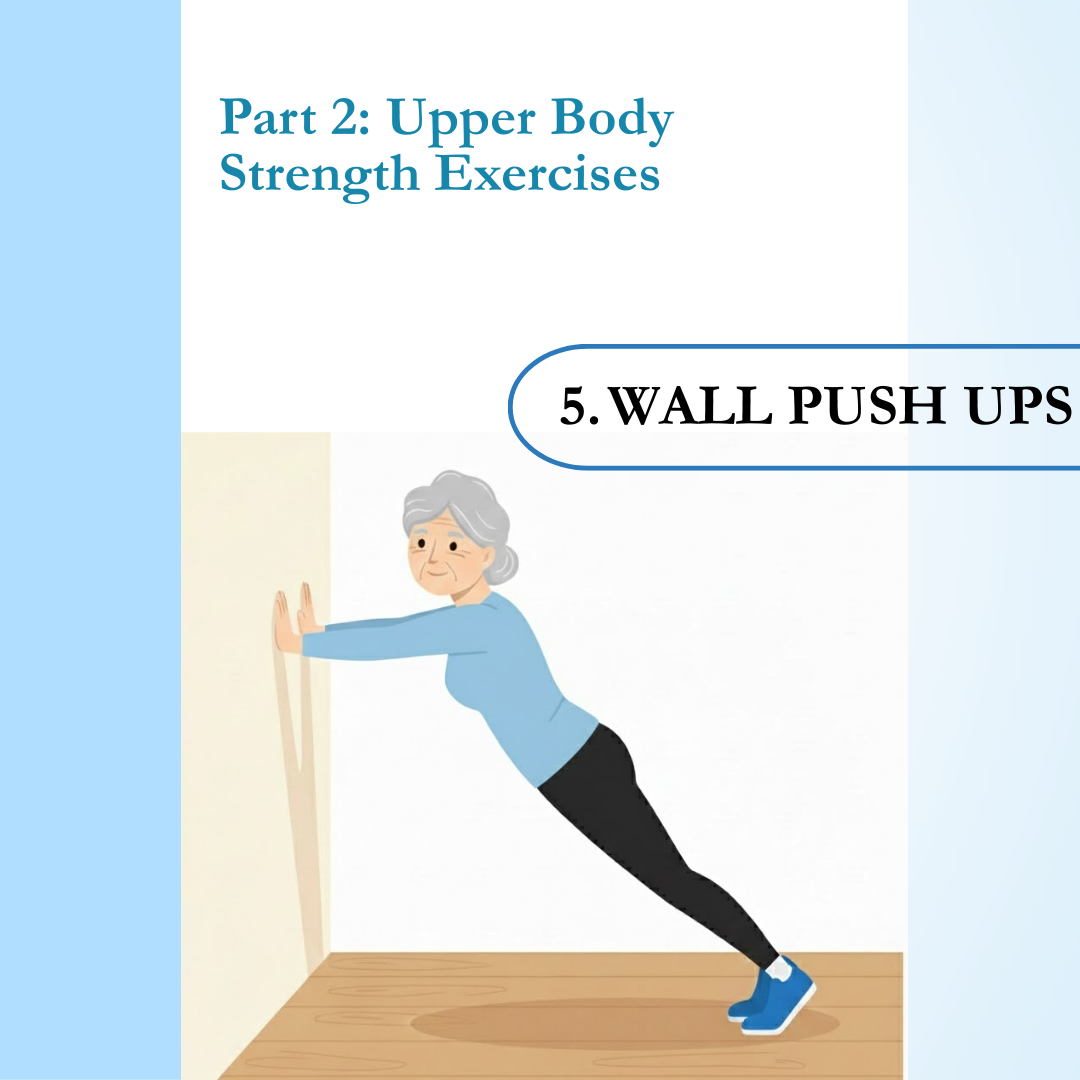
Upper-body strength naturally declines with age, which can make simple tasks like pushing doors, lifting light objects, or supporting oneself harder. Wall push-ups offer a safe way to keep the arms, shoulders, and chest active without putting stress on ageing joints.
Because the wall supports the body, seniors feel steady and confident while performing this movement. Over time, it improves posture and reduces reliance on others for routine activities.
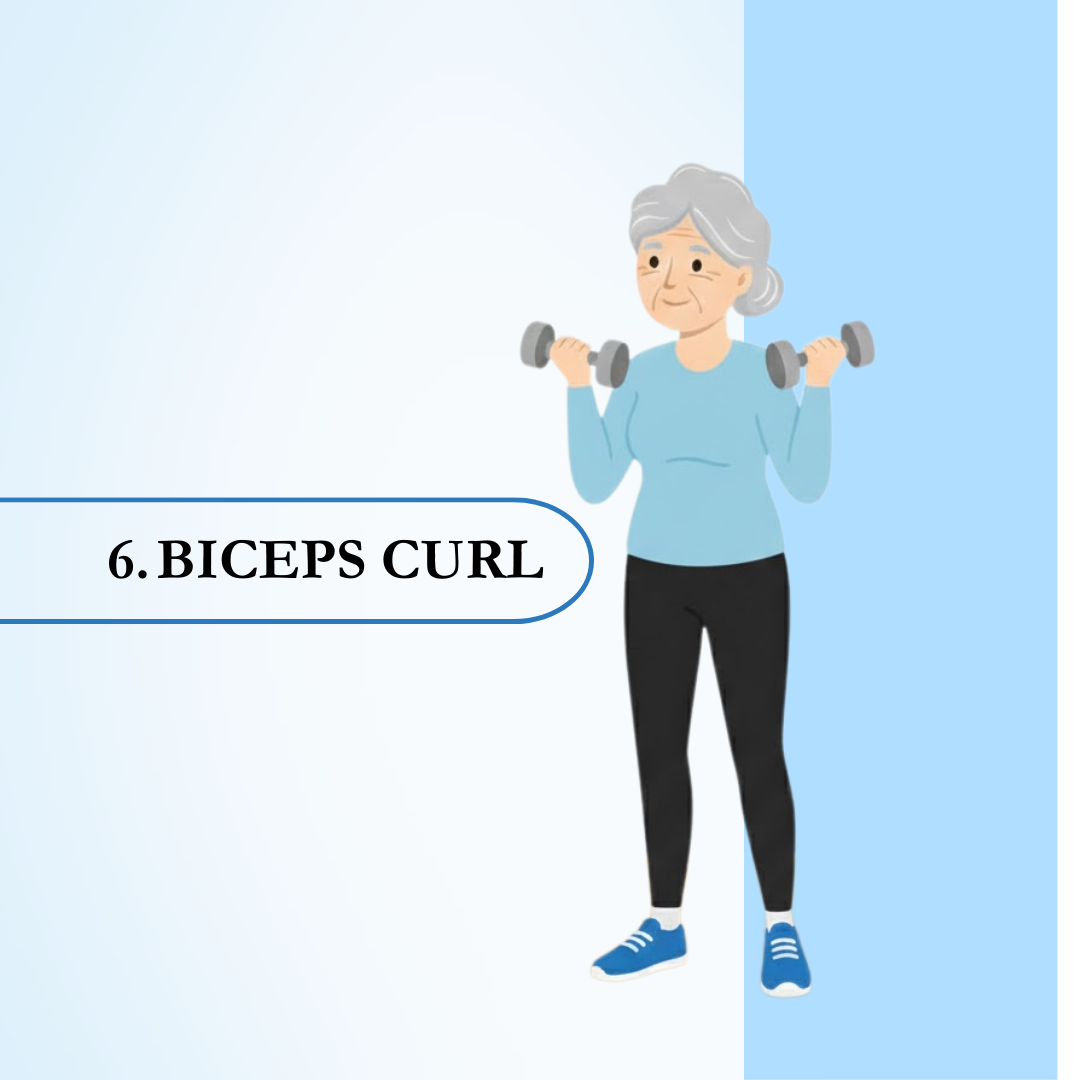
6) Biceps Curl
Biceps curls help seniors over 75 maintain arm strength needed for everyday tasks such as lifting light objects, holding groceries, or using support while standing.
This gentle exercise supports the elbows and shoulders while improving grip and coordination. Performed slowly with light weights or household items, biceps curls help reduce arm weakness and support independence in daily activities without putting stress on ageing joints.
7) Overhead Press
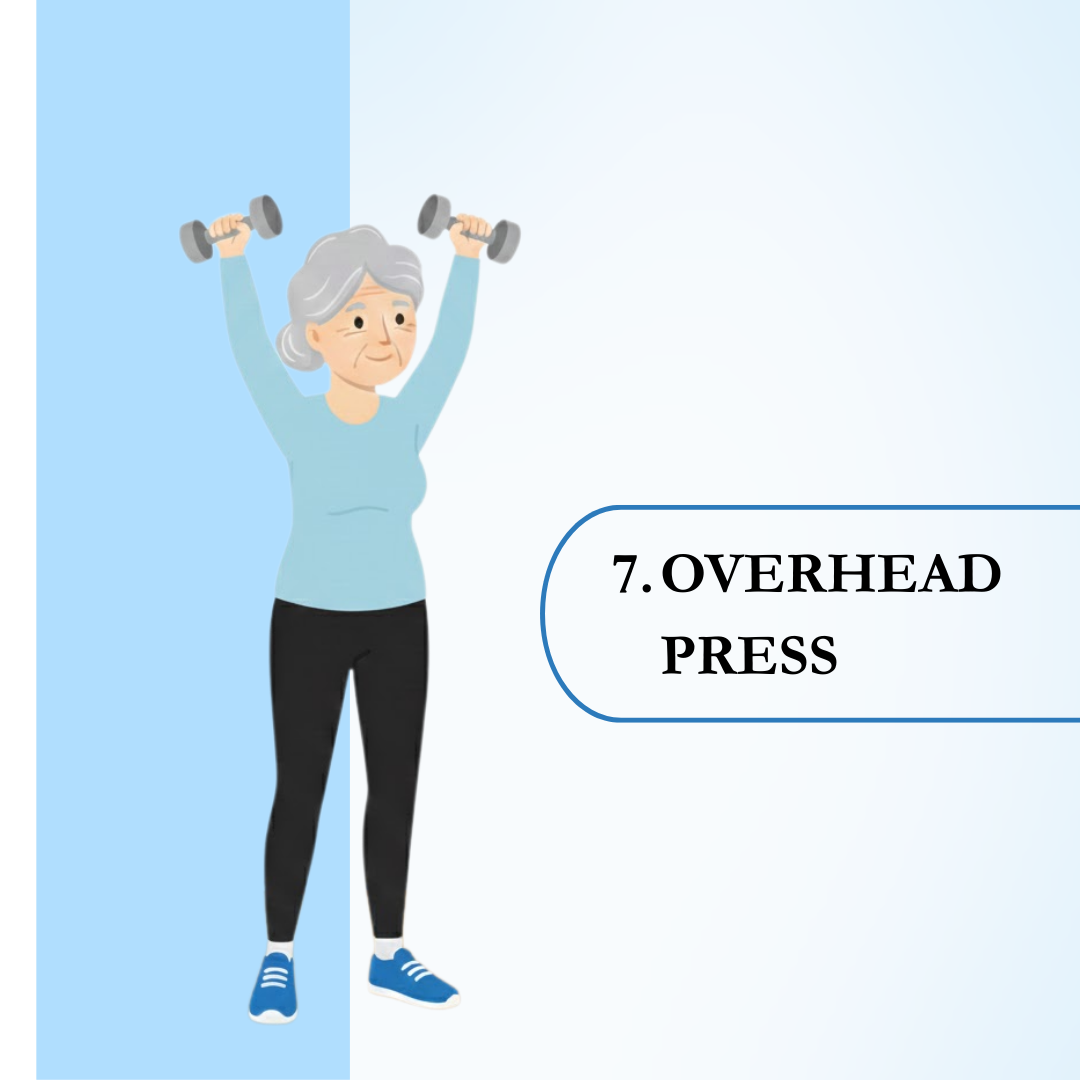
Overhead press helps seniors over 75 maintain shoulder mobility and arm strength needed for everyday activities such as reaching shelves, combing hair, or lifting light objects.
This movement supports joint flexibility and prevents stiffness caused by limited arm use. When performed slowly while seated and using very light weights or even empty hands, it feels safe and controlled. Regular practice improves confidence in reaching movements and reduces dependence on others for simple daily tasks.
8) Chest & Arm
Chest and arm movements help seniors over 75 keep the upper body open, flexible, and well-aligned. These gentle exercises improve posture, making breathing easier and reducing rounded shoulders caused by prolonged sitting.
They also support smoother arm movements needed for dressing, grooming, and light household tasks. Performed calmly and without force, chest and arm exercises reduce stiffness, encourage better circulation, and help seniors feel more comfortable and relaxed during daily upper-body movements.

Part 3 – Core & Back Excercises
9) Pelvic Tilt
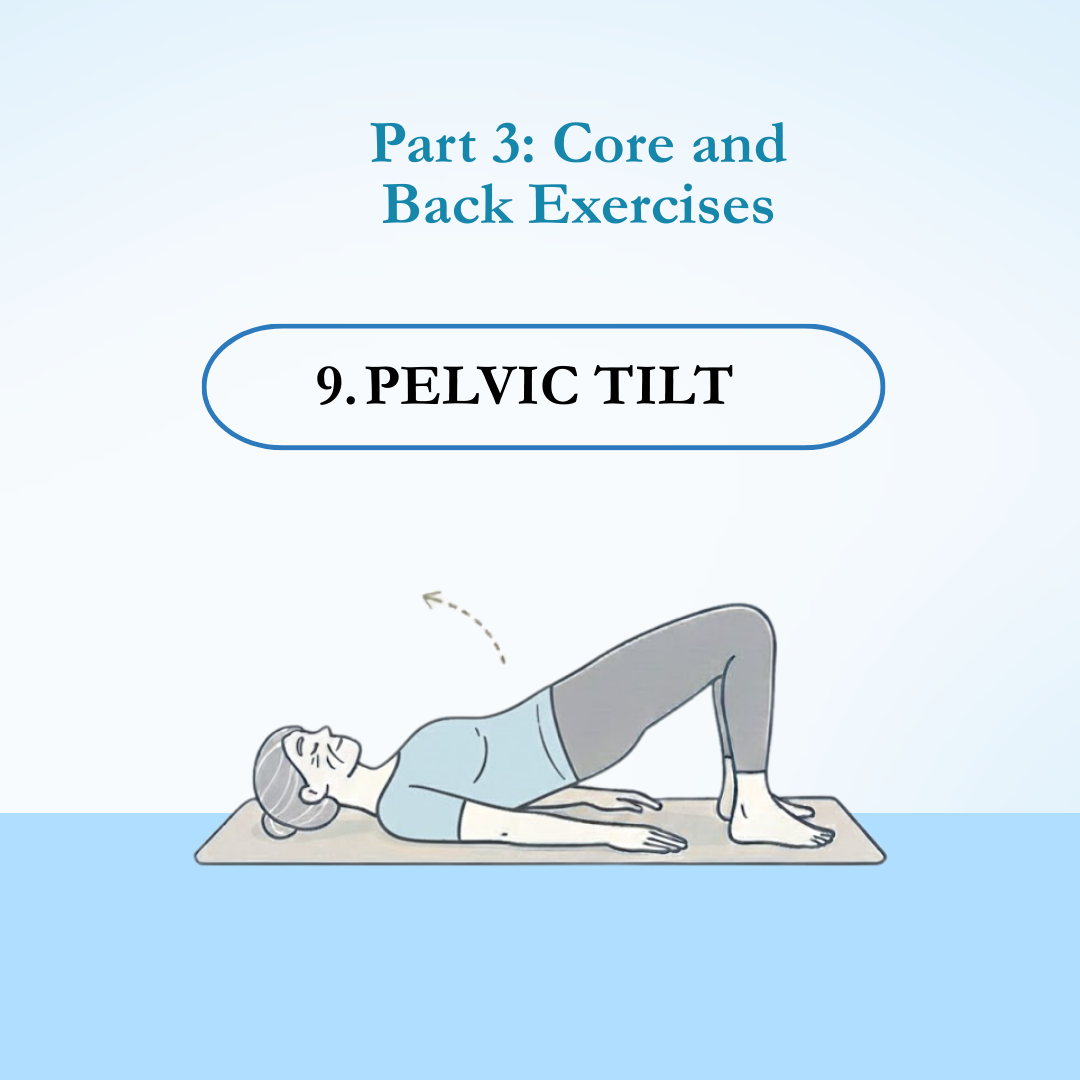
Pelvic tilts gently strengthen the muscles that support the lower back and spine, which often weaken with age. For seniors over 75, this exercise helps reduce lower back stiffness and improves posture during sitting and standing.
It is especially helpful for those who experience discomfort after long periods of rest or sitting. Performed slowly and with control, pelvic tilts support smoother movement transitions and help maintain comfort during daily activities.
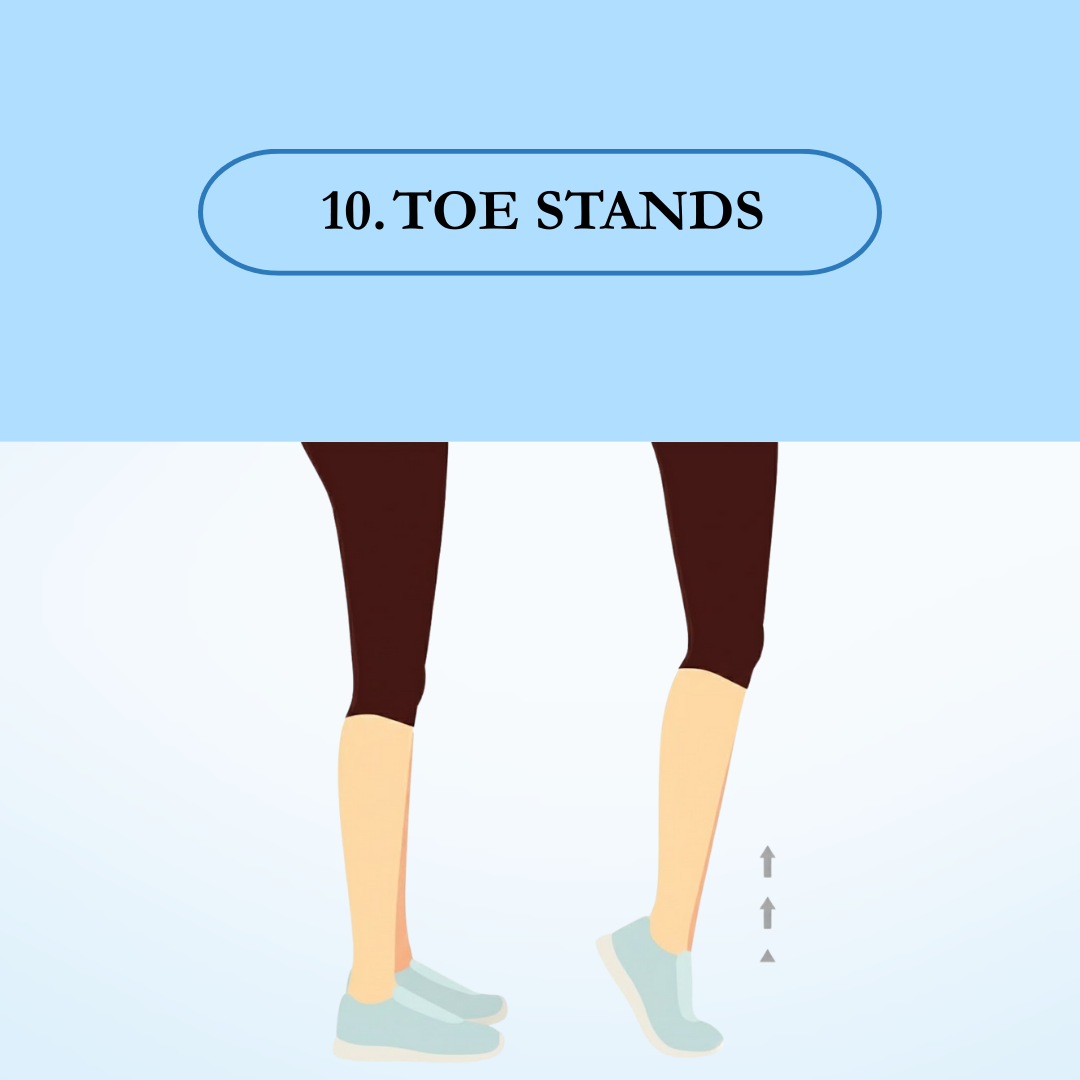
10) Toe Stands
Toe stands strengthen the calves and ankles, which play a crucial role in balance and safe walking. For seniors over 75, weak ankles often lead to unsteadiness and fear of falling.
This gentle exercise improves stability and confidence when moving around the home. Holding a chair or wall for support ensures safety while lifting the heels slowly. Practised regularly, toe stands help seniors walk more steadily and feel secure while standing or moving.
11) Floor Back Extension
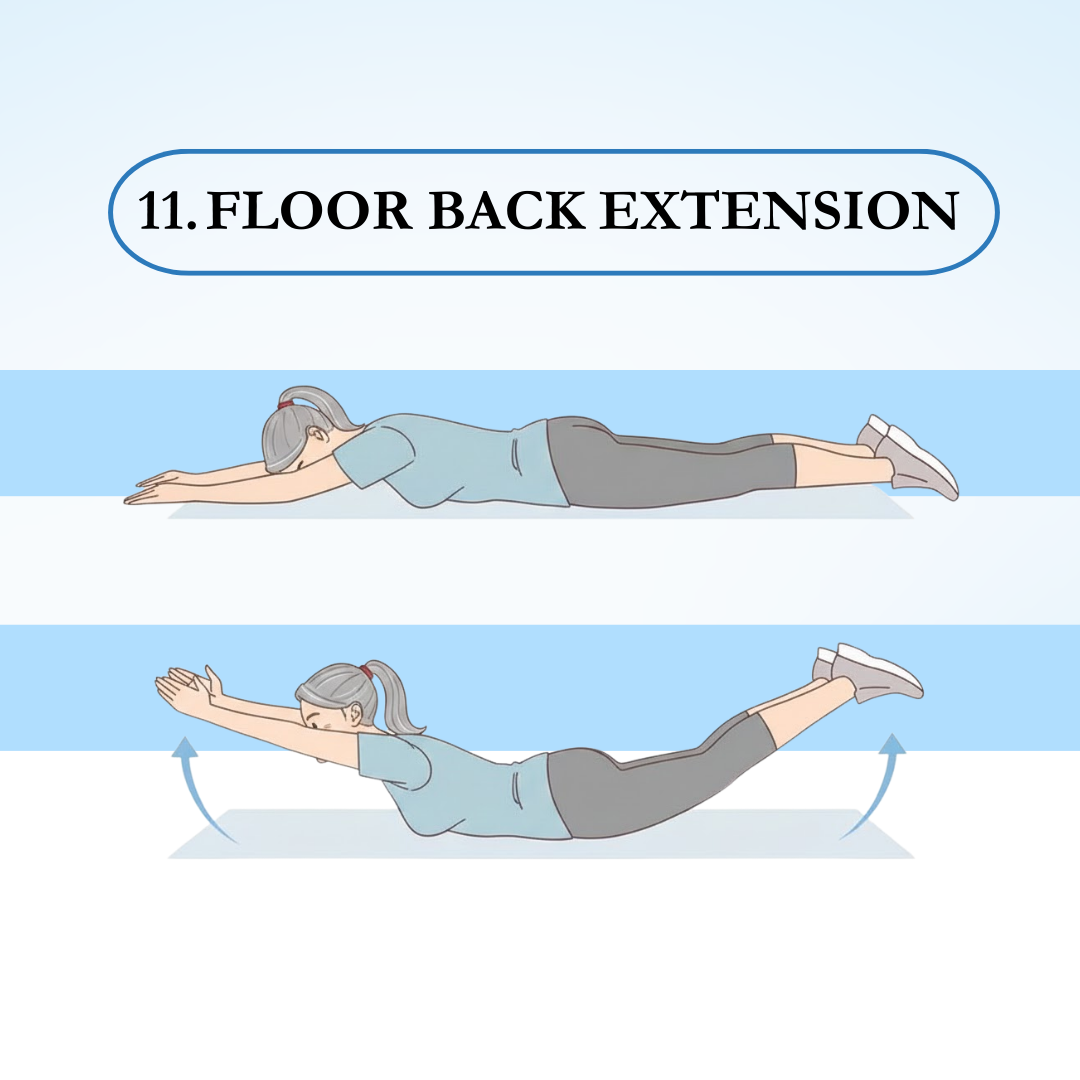
Floor back extension helps seniors over 75 gently strengthen the muscles that support the spine and improve posture. Weak back muscles often lead to stiffness, slouching, and discomfort during sitting or walking.
This exercise encourages better spinal alignment and helps reduce mild back tightness caused by long periods of inactivity. Performed slowly and only within a comfortable range, floor back extensions support smoother movement and improved confidence while standing, walking, or changing positions. It should always feel gentle, controlled, and never strained.
Part 4 – Knee & Leg Mobility Excercises
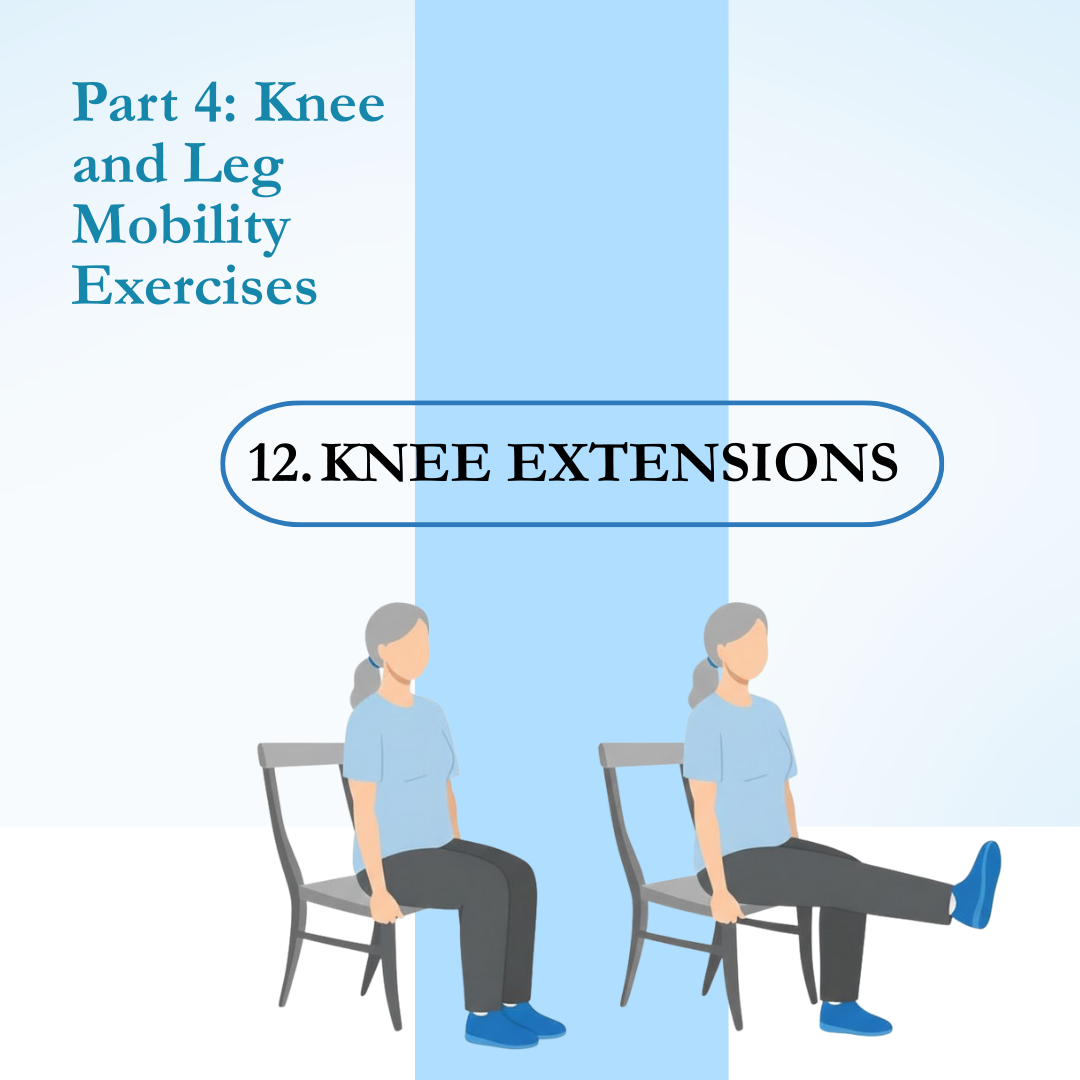
12) Knee Extension
Knee extension helps seniors over 75 strengthen the thigh muscles that support the knee joint and improve walking stability. Weak knees can make standing up, sitting down, or walking feel tiring and uncertain.
This gentle exercise improves circulation, reduces stiffness, and supports smoother leg movement. Performed slowly while seated, knee extensions feel safe and controlled. With regular practice, they help seniors feel more confident, balanced, and comfortable during everyday movements and daily activities.
13) Hamstrings / Calf
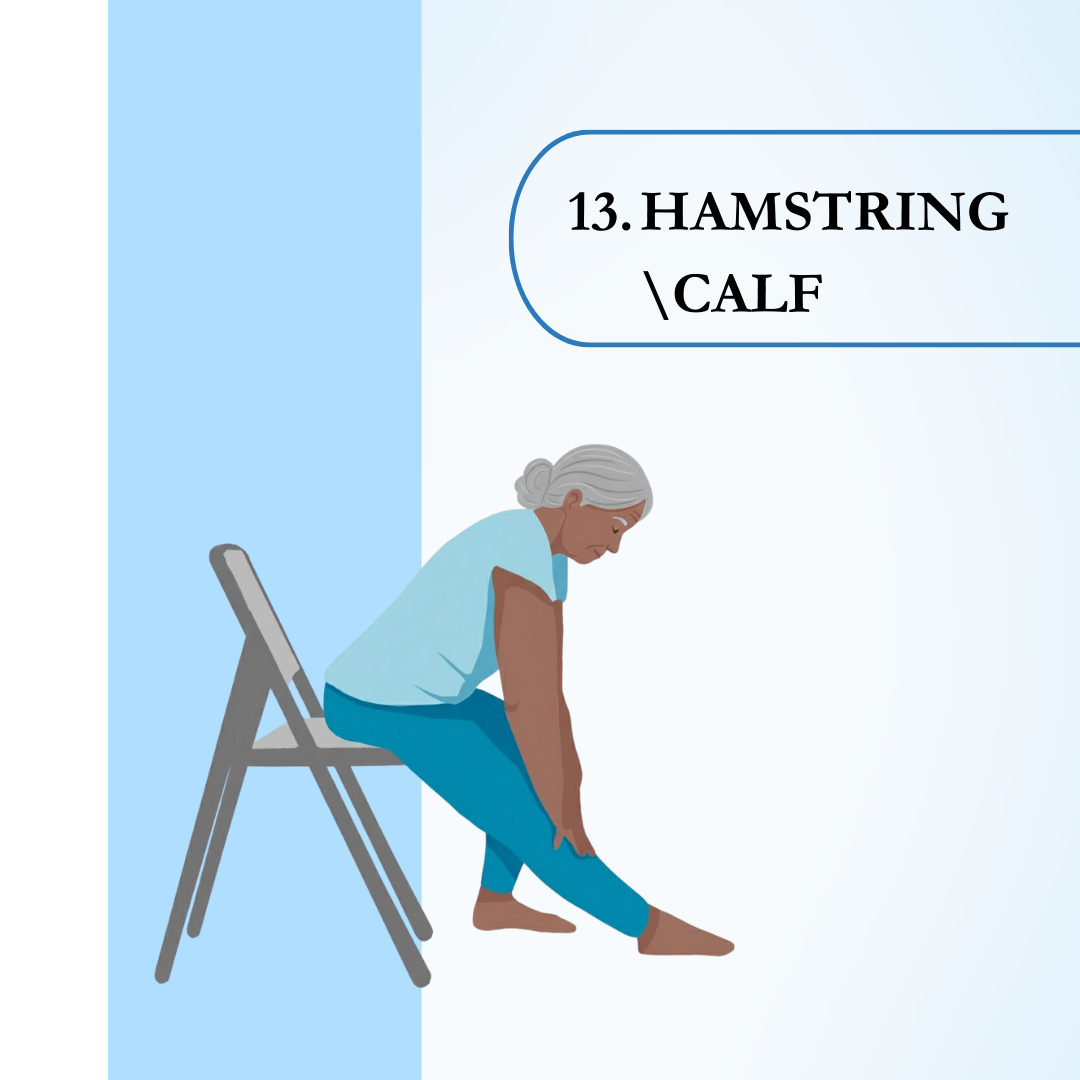
Hamstring and calf exercises help seniors over 75 maintain flexibility and comfort in the legs, which is essential for walking and balance. Tight muscles in these areas can cause stiffness, short steps, and discomfort while standing or moving.
Gentle stretching and movement improve circulation and reduce muscle tightness. Practised slowly with support, these exercises help seniors walk more smoothly, feel steadier on their feet, and reduce strain on the knees and lower back during daily activities.
Part 5 – Neck and Hand Excercises
14) Finger Marching
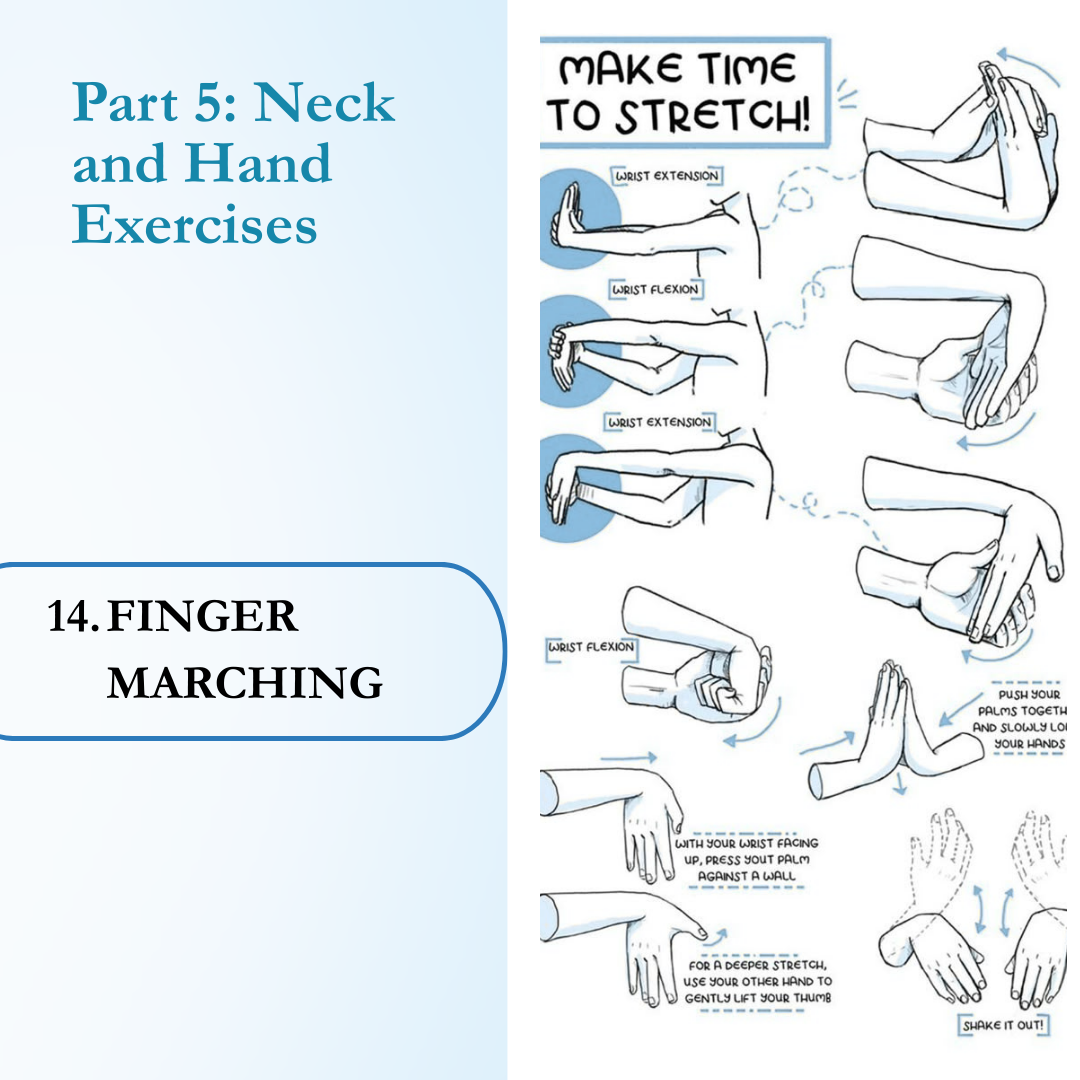
Finger marching helps seniors over 75 keep their hands flexible, coordinated, and responsive for everyday tasks. With age, finger stiffness can make simple activities like eating, writing, or buttoning clothes difficult.
This gentle movement encourages blood flow and supports fine motor control without strain. Finger marching also stimulates coordination between the hands and the brain, supporting focus and dexterity. It can be done comfortably while seated, resting, or watching television, making it easy to practise daily.
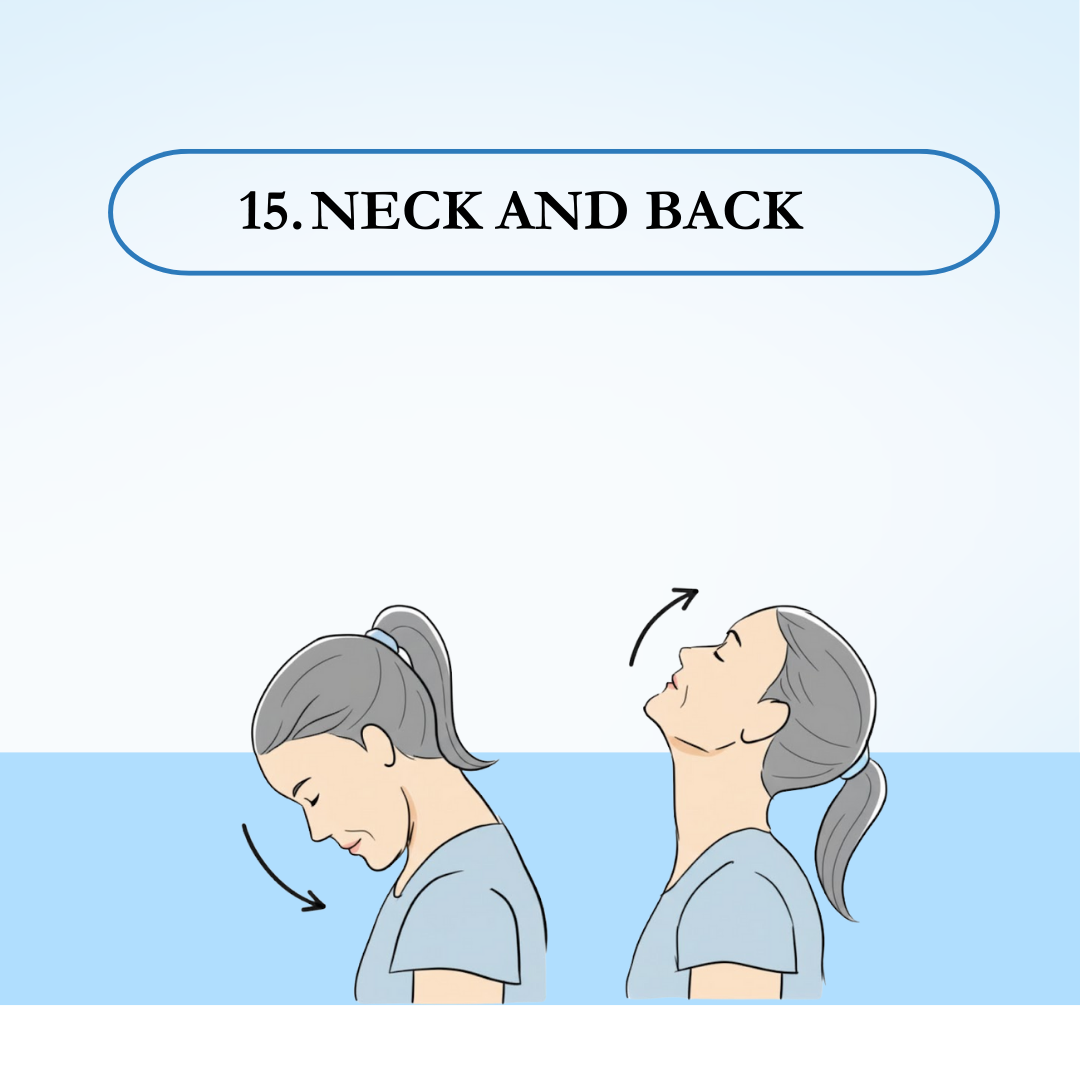
15) Neck & Back
Gentle neck and back movements help seniors over 75 reduce stiffness, improve posture, and stay comfortable throughout the day. Ageing often brings tightness in these areas due to prolonged sitting or reduced movement.
Slow, controlled exercises support better blood flow, ease tension, and make turning the head or changing positions feel easier. Practised regularly and without force, neck and back movements help seniors feel more relaxed, balanced, and confident during daily activities.
Take the Support of Trained Experts
While gentle exercises are beneficial, seniors over 75 often have unique health conditions such as joint issues, balance concerns, or chronic pain. Performing movements under the guidance of trained professionals ensures exercises are done safely, correctly, and according to individual needs. Expert supervision reduces the risk of injury, improves confidence, and helps seniors stay consistent.
Elderly Wellness connects families with experienced physiotherapists and trained care professionals who understand ageing bodies. With personalised guidance and compassionate support, seniors receive care that prioritises safety, comfort, and long-term well-being—giving families complete peace of mind.
Final Words
For seniors over 75, exercise is not about pushing limits—it is about preserving comfort, balance, and independence. Gentle movements, practised regularly and at a relaxed pace, help the body stay responsive and confident. Even small efforts make daily activities feel easier and safer. When supported with patience and consistency, these exercises can improve quality of life, reduce stiffness, and encourage seniors to move with greater ease, dignity, and confidence in their everyday routines.